

Medically reviewed by Dr. Shreyaben Anilkumar Patel (Reg. GPC-20492) on 7 Oct 2026.
Key takeaways
- Knee osteoarthritis is very common after 45 and is not simply caused by “using the knee too much”.
- Exercise therapy — especially thigh and hip strengthening — is a first-line treatment recommended by major guidelines.
- Pain during exercise is acceptable if it is mild and settles within 24 hours.
- Weight management, supportive footwear and pacing activities reduce load on the knee.
- Many people with arthritis improve so much with physiotherapy that surgery can be delayed or avoided.
In this article
Knee pain while climbing stairs, getting up from the floor or after a long walk is one of the most frequent complaints among adults over 45 in Himatnagar and across Gujarat, where floor sitting, squatting and long hours of standing are part of daily life. In many cases the cause is osteoarthritis. The encouraging news: knee osteoarthritis physiotherapy — particularly the right strengthening exercises — can reduce pain and improve walking for most people.
What is knee osteoarthritis?
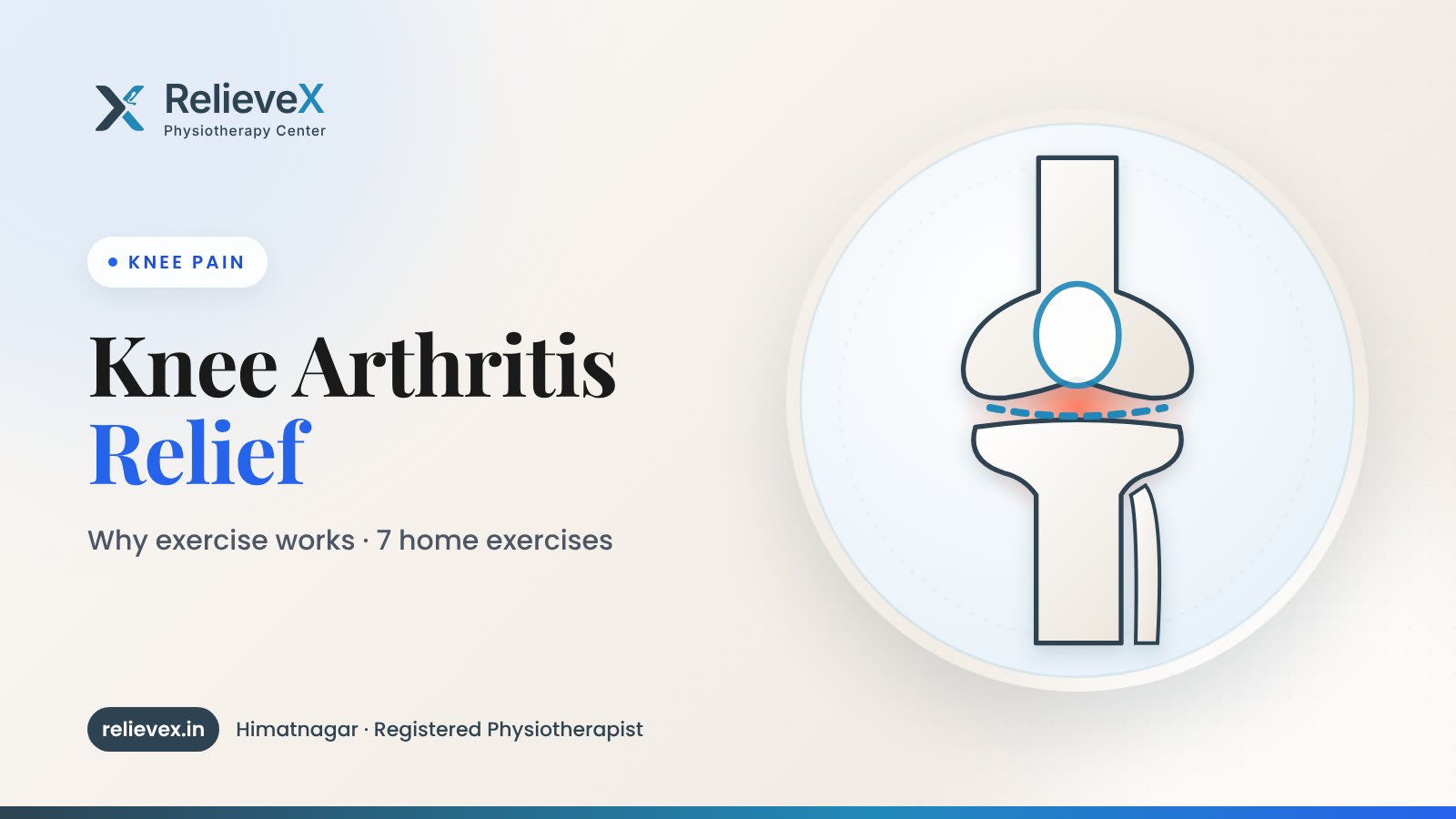
Osteoarthritis (OA) is a condition in which the cartilage that cushions the ends of the bones becomes thinner and the joint undergoes changes such as small bony outgrowths and mild inflammation. It is often called “wear and tear”, but that is only part of the story. Genetics, previous injuries, body weight, muscle weakness and general health all play a role. Importantly, X-ray changes do not always match the level of pain: some people with severe X-ray changes have little pain, and vice versa.
Signs and symptoms
- Knee pain on climbing stairs, squatting, kneeling or after long walks
- Stiffness in the morning or after sitting, usually easing within 30 minutes
- Swelling around the knee after activity
- Crunching or grating sounds when moving
- Reduced ability to fully bend or straighten the knee
- Feeling that the knee is weak or may give way
See a doctor promptly if: the knee becomes hot, red and very swollen, you have a fever, you cannot bear weight after an injury, or the knee locks and will not straighten.
Why exercise is the best treatment for knee arthritis
When the quadriceps (front thigh) and hip muscles are strong, they absorb shock and control the knee, so less stress reaches the joint surfaces. Guidelines from organisations such as NICE recommend exercise and education as core treatment for everyone with osteoarthritis, regardless of age or X-ray severity. Exercise also improves balance, reduces stiffness and helps with weight control.
Physio rule of thumb: Mild pain (up to about 3–4 out of 10) during exercise is acceptable if it settles within 24 hours. If pain is higher or lasts longer, reduce the amount — don’t stop completely.
7 knee exercises you can do at home
- Quadriceps sets – Sit with your leg straight. Tighten the thigh muscle to push the back of your knee down. Hold 5 seconds. 10–15 times.
- Straight leg raise – Lie on your back with one knee bent. Keep the other leg straight, tighten the thigh and lift it to the height of the bent knee. Lower slowly. 10 times each leg.
- Seated knee extension – Sit on a chair and slowly straighten one knee, hold 3 seconds, lower. 10–15 times. Add a light ankle weight as you get stronger.
- Sit-to-stand – From a firm chair, stand up without using your hands if possible, then sit down slowly. 8–10 times. Use a higher chair if this is painful.
- Side-lying leg raise – Lie on your side and lift the top leg up and slightly back to strengthen the hip. 10 times each side.
- Step-ups – Step up onto a low step with the weaker leg, then step down slowly. 8–10 times, holding a rail for support.
- Calf raises – Holding a support, rise up onto your toes and lower slowly. 10–15 times.
Aim for these exercises 3–4 times a week, plus regular walking or stationary cycling. Your physiotherapist will progress the difficulty as your strength improves.
Daily tips for living with knee arthritis
- Stairs: “Up with the good, down with the bad” — lead with the stronger leg going up and the painful leg going down, holding the rail.
- Floor sitting: use a low stool or cushion instead of cross-legged sitting during flare-ups; choose a Western-style toilet if squatting is painful.
- Footwear: wear cushioned, supportive footwear and avoid walking long distances barefoot on hard floors.
- Weight: even a modest weight loss reduces load on the knees noticeably with every step.
- Pacing: split long tasks such as cooking, shopping or farm work into shorter sessions with breaks.
- Walking aid: a walking stick held in the hand opposite to the painful knee can reduce pain during bad days.
Common myths about knee arthritis
- “Exercise will wear out my knee faster.” The opposite is true for most people — the right exercise strengthens the muscles that protect the joint and improves joint health.
- “Nothing can be done except surgery.” Exercise, weight management, physiotherapy and pacing help most people. Surgery is considered only when pain and disability stay severe despite good conservative care.
- “The X-ray shows severe arthritis, so I will always have severe pain.” X-ray findings and pain often do not match. Many people with marked X-ray changes manage well with strong muscles.
- “I should rest my knee completely when it hurts.” Short rest during a flare-up is fine, but long inactivity weakens the muscles and increases stiffness.
- “Knee pain is just old age.” Age is one factor, but strength, weight, previous injuries and activity habits play a big role — and these can be changed.
How physiotherapy treats knee osteoarthritis
- Detailed assessment of strength, range of motion, walking pattern and balance
- Progressive strengthening and balance training tailored to your level
- Manual therapy to improve joint mobility
- Pain-relief modalities such as TENS, IFT or heat when appropriate
- Advice on activity pacing, footwear and aids
- A long-term home programme so improvement lasts
If arthritis is advanced and knee replacement is recommended, “prehab” before surgery leads to a smoother recovery afterwards — see our guide on rehabilitation after knee replacement.
Knee pain treatment in Himatnagar
At RelieveX Physiotherapy Center, Gambhoi, Himatnagar, Dr. Shreyaben Patel designs knee programmes for people at every stage of arthritis — from early morning stiffness to difficulty walking. Elderly patients who find travel difficult can choose home physiotherapy.
Book an appointment to get a knee strengthening plan built around your daily life.
Frequently asked questions
Can knee osteoarthritis be reversed?
The structural changes cannot be fully reversed, but pain, stiffness and walking ability usually improve significantly with strengthening exercise, weight management and physiotherapy.
Is walking good for knee arthritis?
Yes. Regular walking at a comfortable pace keeps the joint healthy and the muscles strong. Start with shorter walks on even ground and increase gradually.
Should I avoid stairs if I have knee pain?
You don't need to avoid stairs completely. Use the handrail, lead with the stronger leg going up and the painful leg going down, and build strength with exercises like step-ups.
How long does physiotherapy take for knee arthritis?
Many people notice improvement after 4–6 weeks of regular exercise. Strength gains continue for several months, and continuing a home programme helps maintain the benefits.
References & further reading
This article is for general education and is not a substitute for a personal medical assessment. If you have severe, worsening or unusual symptoms, please consult a doctor or physiotherapist.

About the author
Dr. Shreyaben Anilkumar Patel
Bachelor of Physiotherapy (BPT) · Reg. GPC-20492
Dr. Shreyaben Anilkumar Patel is a Gujarat State Council registered physiotherapist (GPC-20492) at RelieveX Physiotherapy Center, Himatnagar, helping patients recover from pain, injury, surgery and stroke with personalised, evidence-based treatment.
View full profile